
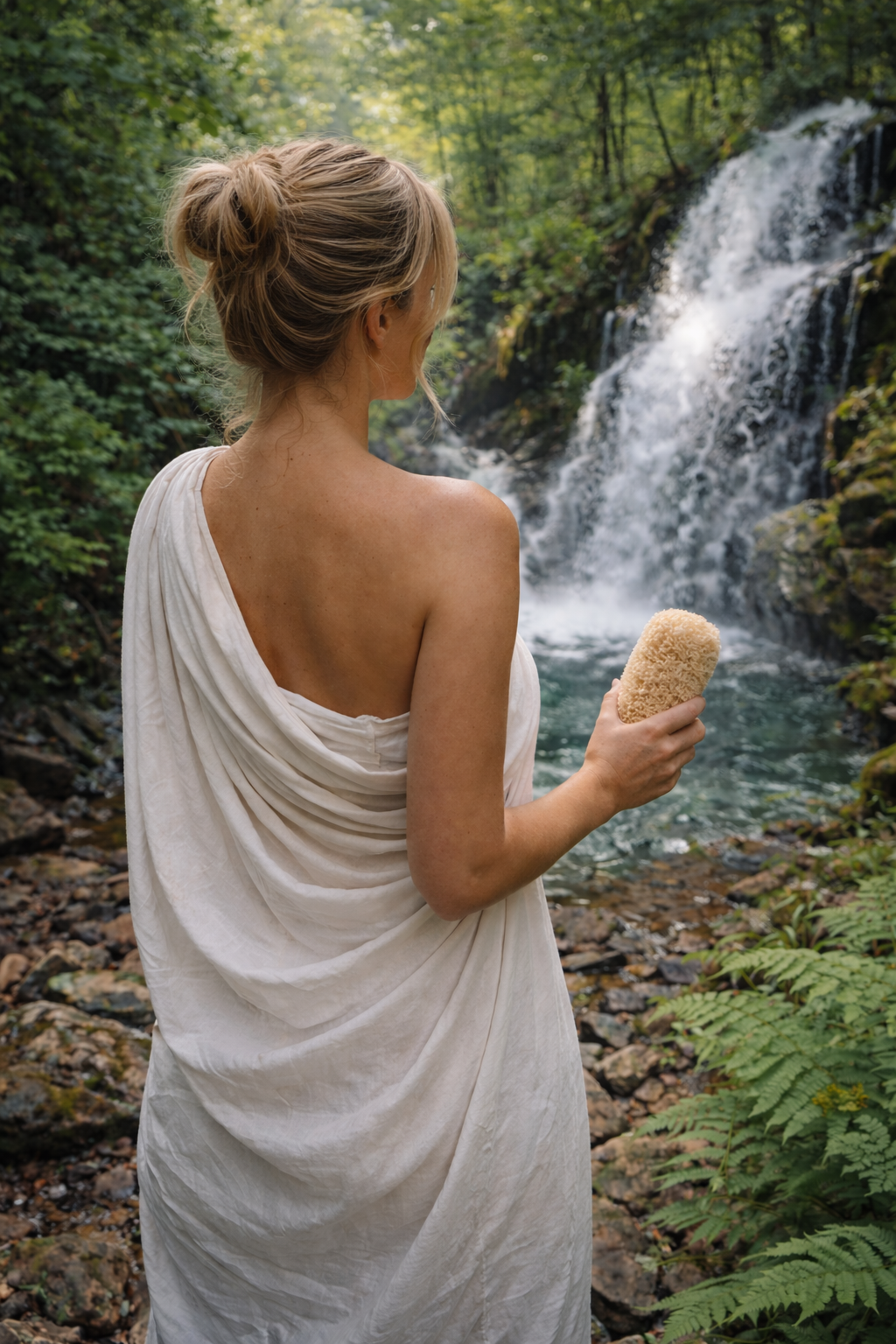
The first time someone told me about forest bathing, I pictured a very serene person standing in the woods with a loofah. Maybe a rubber duck. Possibly a bathrobe. I had questions.
And then I looked it up, because that is what you do when your brain hands you something that makes no sense. And what I found was not a loofah. What I found was forty years of actual science, a Japanese government wellness program, and a growing stack of peer-reviewed research that basically says: the trees are doing something to you. Something good. And you can do it on purpose.
So. Let's talk about forest bathing.
What it actually is (not a bath)
Forest bathing — or Shinrin-yoku, as it's called in Japan where researchers basically invented the science of it — is not exercise. It is not a hike. It is not a steps challenge. There is no distance goal. There is no elevation gain to brag about. It is simply this: slow, intentional time in a forest, with all five senses turned on, and your phone turned off.
That's it. That is the whole thing.
You walk slowly. You stop and look at stuff. You notice the smell of the trees, the texture of bark, the specific quality of the light coming through the canopy. You do not calculate your pace. You do not narrate it on a podcast. You do not ask Molly to hold still for a reel. You are just... there. In the woods. Paying attention.
I know. For some of us, this sounds like torture. I'm an Army instructor. My entire professional identity is built around doing things with purpose and measurable outcomes. The first time I tried this — genuinely tried it, on purpose, without a fitness goal attached — I made it about four minutes before I started mentally reorganizing my garage.
But here's the thing that got me to stick with it: the science is not messing around.
What the trees are actually doing to you
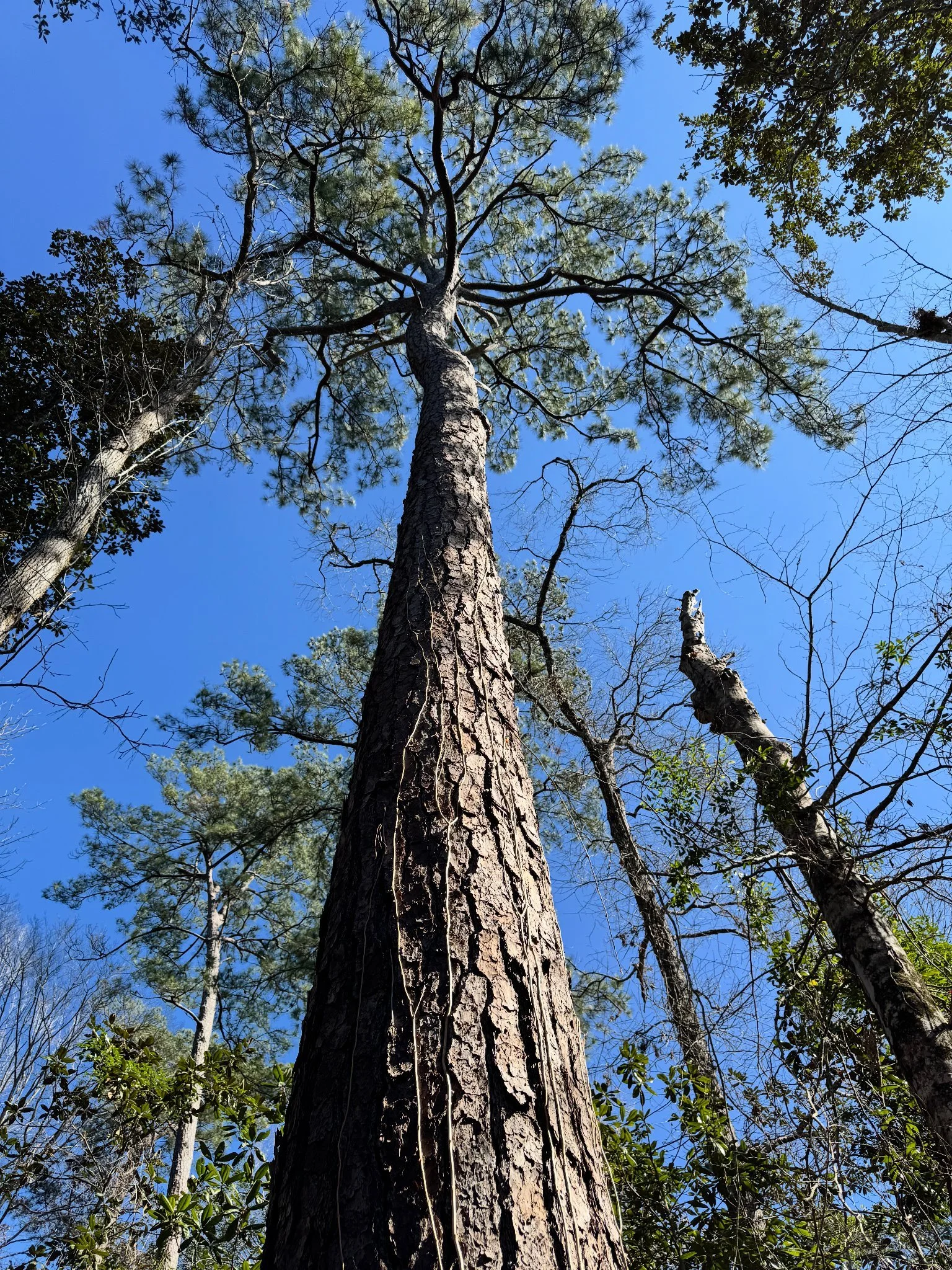
Trees release something called phytoncides — volatile organic compounds that function as the tree's immune system. Their job, from the tree's perspective, is to fight off bugs and bacteria. But when you breathe them in? Your immune system pays attention too. Research out of Japan's Nippon Medical School found that about 50% of the measurable health benefits of forest bathing come directly from the chemistry of forest air. You are not just enjoying a pleasant walk. You are breathing in the forest's defense system, and yours is quietly going to work.
~12 pts average drop in systolic blood pressure after 3 days of forest bathing vs. urban settings
2 hrs minimum time shown to produce measurable stress and mood benefits
28 studies pooled in a 2023 meta-analysis confirming consistent blood pressure reductions
The stress research is the strongest. Cortisol — the hormone your body produces when it's running a low-grade internal panic — drops measurably after time in a forest compared to time in an urban environment. Sleep quality improves. Anxiety and depression symptoms decrease. Mood scores go up. The evidence has been replicated across multiple countries and populations, and it is consistent enough that Japan has over 60 designated official forest therapy trails and forest medicine is a recognized field of preventive healthcare there.
Meanwhile, we are over here walking on treadmills facing a wall. Just an observation.
"It's a slow, intentional walk through the woods where you're really paying attention to what's around you. You're not trying to get your heart rate up or hit a distance goal." — Dr. John La Puma, board-certified internist
What Molly thinks about forest bathing
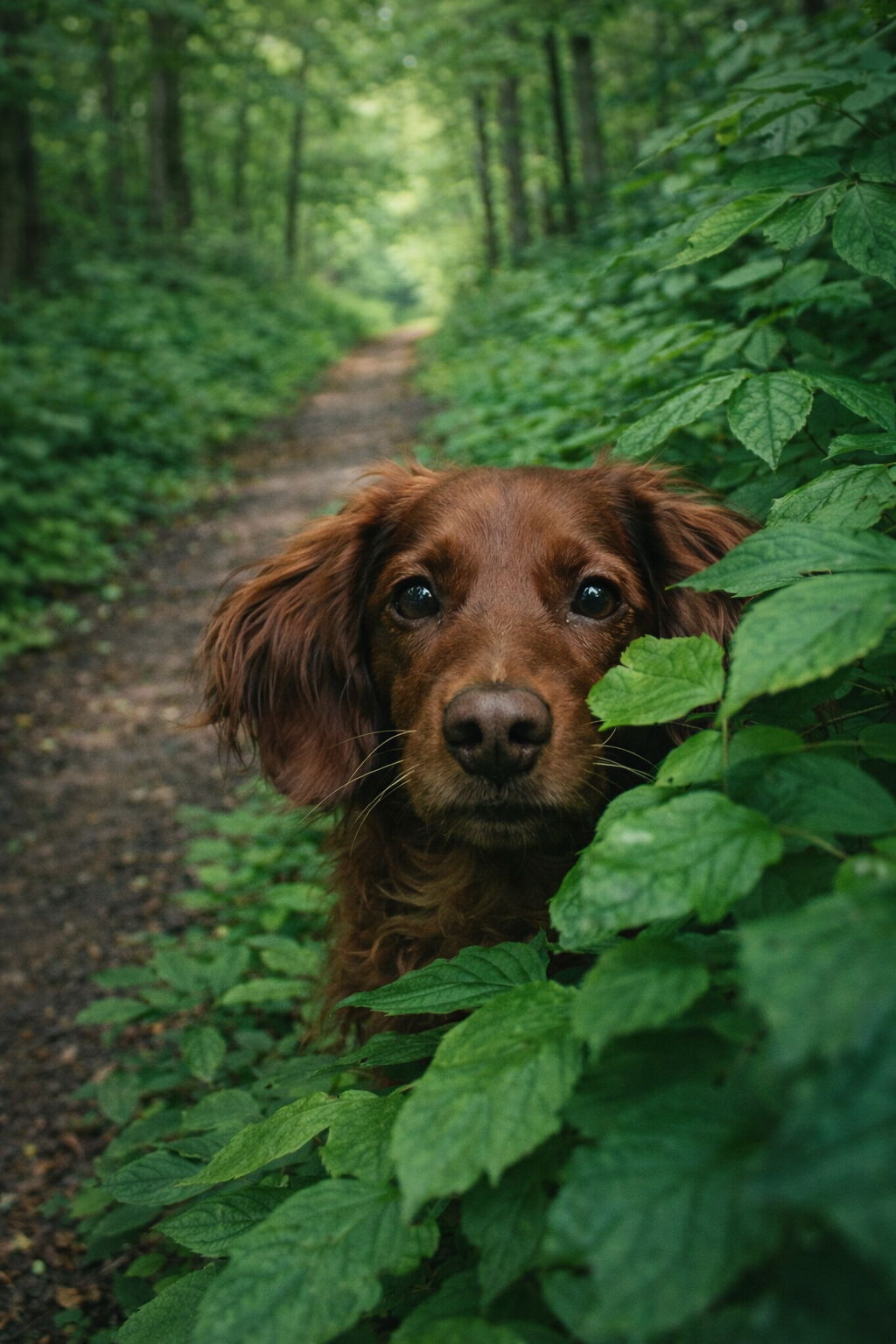
Here is the thing about dogs: they have been forest bathing their entire lives and they did not need a Japanese wellness program to figure it out. Molly's approach to the trail has always been: sniff everything, stop constantly, be extremely interested in a piece of bark for four full minutes, and then look at me like I am the unreasonable one for wanting to make forward progress.
Turns out she was right. She was doing it correctly the whole time. I was the one who needed to catch up.
Trail dogs are, it seems, excellent forest bathing companions. They are naturally slow. They are naturally present. They will absolutely make you stop, stand still, and pay attention to whatever they've found under that log. This is, it turns out, the whole point. Granted, I will say, that Molly drives me NUTS when she constantly stops to put her nose into something on the trail. This research may actually change my perspective on the trail.
How to actually do it
No special gear required. No guide needed for a beginner session. Just a patch of trees, a couple of hours, and a willingness to feel slightly ridiculous for the first ten minutes.
Pick a wooded trail you already know — this is not the day to navigate somewhere new
Leave the headphones at the car. Both of them.
Set a gentle turnaround time — not a distance, a time. Two hours is plenty.
Walk slower than feels natural. Then slower than that.
Stop whenever something catches your attention — and actually look at it
Notice: what do you smell? What do you hear? What does the air feel like?
Put the phone away except for safety. (Yes, still tell someone where you're going — forest bathing doesn't suspend trail safety basics)
Let the dog sniff the log for as long as she wants. She knows what she's doing.
The one thing I'll add that the research doesn't cover
Every study on forest bathing assumes you got there, spent time in the woods, and came home safely. Which means all those lovely cortisol-lowering, blood-pressure-dropping, immune-boosting benefits require one thing first: actually being prepared to be out there alone, even on a familiar trail, even for just a couple of hours.
Tell someone where you're going. Bring water. Keep something on you that makes you findable if you need to be found. I'm working on something specific for that last part — more coming soon — but the first two are free and available to you right now, today, before your next forest bath.
Because the goal is to go slow, breathe deep, and come home with lower cortisol and a very satisfied dog.
The trees will handle the rest.
Safe trails, smart choices, and always — have fun out there 🧡
